Dog brushing by coat type: matching the brush to the coat
Most brushing problems come from using one tool on every dog. Start with the coat in front of you and the right brush becomes obvious.
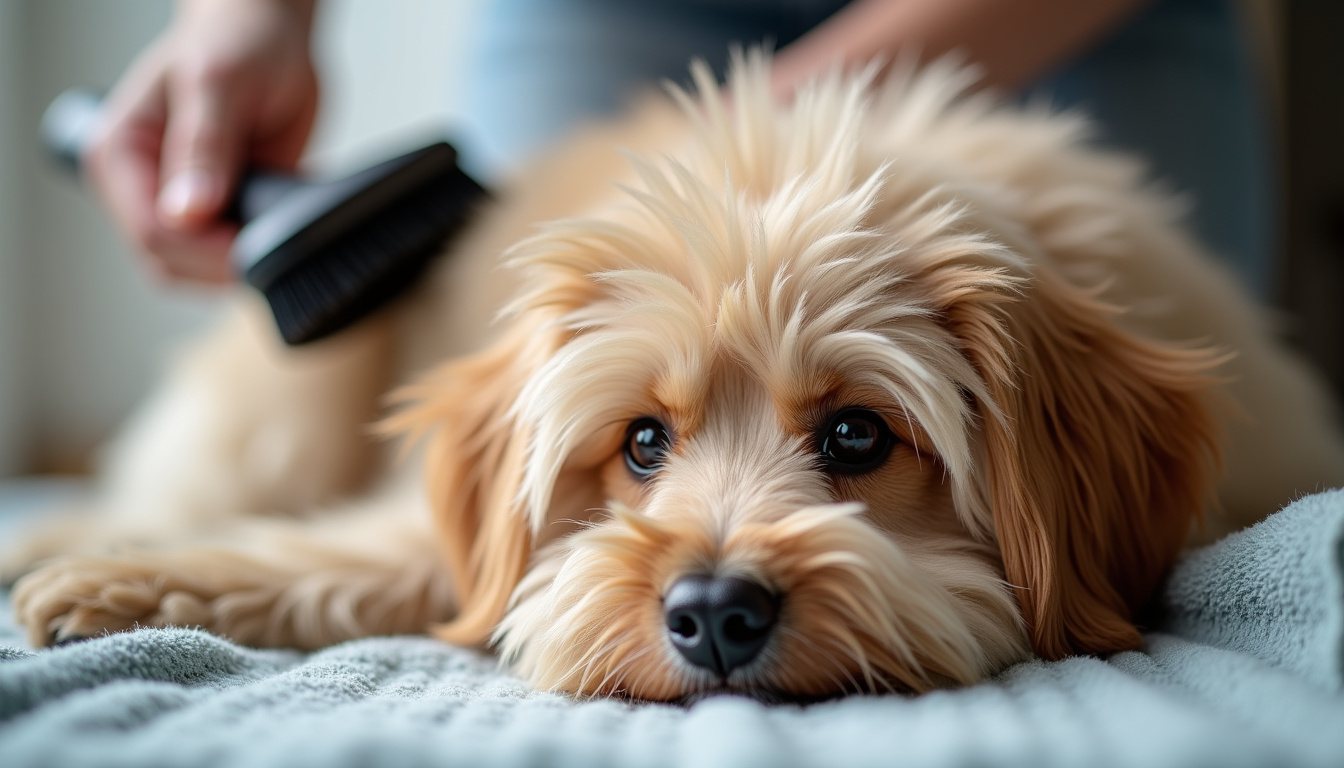
The most common brushing mistake is brushing the outside of the dog. The surface looks lovely, the brush glides, and underneath, next to the skin, the coat is packed with loose undercoat or the beginnings of mats that the brush never reached. I made exactly that mistake with my first long-coated dog, and only found out when the comb stopped dead an inch from the skin.
Brushing is not one task. A Boxer, a Husky, a Wire Fox Terrier, a Poodle and a Yorkshire Terrier have coats that grow, shed and tangle in completely different ways, and the tool that suits one can be useless or uncomfortable on another. So before buying anything, identify the coat.
First, work out which coat your dog has
Many dogs, especially mixed breeds, sit between categories. Part the hair with your fingers and look closely.
- Smooth or short coat: short hair lying flat against the body, no fluffy layer underneath. Think Boxer, Dachshund (smooth), Pit Bull-type dogs, Beagle-ish mixes.
- Double coat: longer, coarser guard hairs on top and a soft, dense, woolly undercoat beneath. Huskies, German Shepherds, Golden Retrievers, Pomeranians, Corgis and Labradors all have one, though the Lab's is short.
- Wire coat: harsh, crisp hair that feels a bit like a scrubbing pad, often with a softer undercoat. Many terriers, Schnauzers and wirehaired pointers.
- Curly coat: tight curls or waves that keep growing and shed very little onto the floor, so loose hair gets trapped in the coat instead. Poodles, Bichons, Portuguese Water Dogs and many doodle crosses.
- Long silky coat: fine, flowing hair with little or no undercoat. Yorkies, Maltese, Shih Tzus, and the feathering on spaniels and setters.
Doodles and other crosses can have anything from a flat, shedding coat to a dense curly one, and sometimes a mixture on the same dog. Brush the coat you see, not the one the breed label promised.
The basic toolkit, and what each piece is for
| Tool | What it does | Best on |
|---|---|---|
| Rubber curry or grooming mitt | Lifts dead hair and dust, massages the skin | Smooth coats; a gentle start for any dog |
| Natural bristle brush | Smooths the coat and spreads skin oils for shine | Smooth and short coats, finishing silky coats |
| Slicker brush | Fine bent wire pins that pull out loose hair and small tangles | Double, curly, wire and long coats, used lightly |
| Pin brush | Widely spaced pins, often with rounded tips, for gentle detangling | Long silky coats, longer double coats |
| Undercoat rake | Long teeth that reach through guard hair to the undercoat | Thick double coats |
| Metal comb (wide and fine teeth) | Checks for tangles down to the skin; finishes the job | Every coat except the shortest |
| Stripping knife or stone | Helps pull out dead wire hair | Wire coats kept in a natural texture |
If you buy only two things for a medium or long-coated dog, make it a decent slicker brush and a steel comb with wide and narrow teeth. The comb is the one people skip, and it is the one that tells you whether you are actually finished.
Smooth coats: less work, still worth doing
Short-coated dogs shed, sometimes a lot. A rubber curry used in small circles, against and then with the direction of growth, loosens a surprising amount of hair. Follow with a bristle brush in the direction the hair lies, and finish with a damp cloth or your bare hand if you want a polished look.
Once a week is usually enough, a bit more in heavy shedding periods. Slickers and rakes are mostly wasted here and can scratch, because there's so little hair between the pins and the skin.
Double coats: work in layers
The undercoat is where the work is. If you only brush over the top, the dog looks tidy while dead undercoat compacts against the skin, holds moisture and eventually mats, especially behind the ears, under the collar, in the "pants" on the back legs and under the tail.
- Start with an undercoat rake, pulled in the direction the hair grows, in short strokes. Let the rake glide; don't drag it.
- Follow with a slicker brush using line brushing: hold the coat up with one hand to create a parting, brush the hair below the parting down and out from the skin, then move the parting up by an inch or so and repeat.
- Finish with the comb. Where it snags, go back with the slicker.
Two or three sessions a week keeps most double coats in good shape, with daily sessions during the seasonal blowout. Our deshedding season guide covers that part of the year in detail, and why we don't shave double coats explains why brushing beats clippers for this coat type.
Wire coats: brushing plus stripping
Wire coats don't shed in the usual way; the dead hairs stay in the coat until they are pulled out. A slicker brush and comb once or twice a week keep the furnishings (the longer hair on legs and face) free of tangles.
To keep the harsh texture and color, many owners and groomers hand-strip, removing dead hair by pulling it in the direction of growth, a little at a time, either with fingers or a stripping tool. Done properly it should not hurt, because dead hair comes out easily. Clipping a wire coat is faster and perfectly acceptable for a pet, but the coat usually grows back softer and paler. If you want to learn stripping, ask a groomer who does it to show you on your own dog; it is much easier to learn by watching than by reading.
Curly coats: mats form from the skin outward
Because curly coats hold onto shed hair, they mat quickly, and the mats often start right at the skin where you can't see them. Brushing the fluffy surface of a Poodle or doodle can make the coat look perfect while felt builds underneath.
Line brushing is essential here. Work in sections with the slicker, lightly, all the way to the skin, then comb every section. Pay attention to friction points: armpits, behind the ears, collar and harness lines, between the back legs. Short, daily sessions are far easier than one long weekly battle. Many owners of curly-coated dogs keep the coat shorter between professional grooms precisely because it makes this manageable; there is more on that in clippers versus scissors at home.
Long silky coats: gentle and frequent
Silky coats with little undercoat tangle easily and break if you rip through them. Use a pin brush or a soft slicker, start at the tips and work toward the skin in small sections, holding the hair above a tangle so you are not pulling on the skin. A light spritz of water or a dog coat conditioner spray can help; brushing a completely dry long coat tends to cause breakage and static.
Finish with a comb. Check the beard, the area behind the ears and the feathering on legs daily. Many owners of Maltese and Shih Tzus choose a shorter "puppy" trim for a pet because a full-length coat needs daily care.
Technique that applies to every coat
- Short sessions win. Ten calm minutes most days beats an hour of struggle on Sunday.
- Hold the skin, not the hair. When working through a tangle, hold the hair at the base between your fingers so the pull goes against your hand, not the dog's skin.
- Light pressure. Brush burn, a red, raw patch from repeated slicker strokes on one spot, is common and avoidable.
- Brush before baths. Water tightens mats. Our home bathing guide explains why the brush always comes first.
- Look at the skin as you go. Brushing is your best chance to spot lumps, ticks, scabs, redness or flaky patches.
Anything unusual on the skin, such as a new lump, an area your dog won't let you touch, hair loss in patches, hot spots or persistent scratching, deserves a call to your vet rather than more brushing.
When brushing turns into a fight
Some dogs tolerate brushing, some love it, and some hate it, often because of past experiences with mats being pulled. If your dog walks away, stiffens or starts mouthing the brush, stop and rebuild slowly with very short, rewarding sessions. Our guide to grooming an anxious dog walks through how. If you have a puppy, starting now with gentle grooming introductions saves you years of wrestling.
And if the coat is already beyond what you can comb through, that's not a failure. Book a groomer, ask them to get the coat back to a manageable state, and start your routine fresh from there.