Bathing a dog at home without the chaos
A good bath is mostly preparation: a brushed coat, the right shampoo, lukewarm water, a thorough rinse and a plan for drying before you turn the tap on.
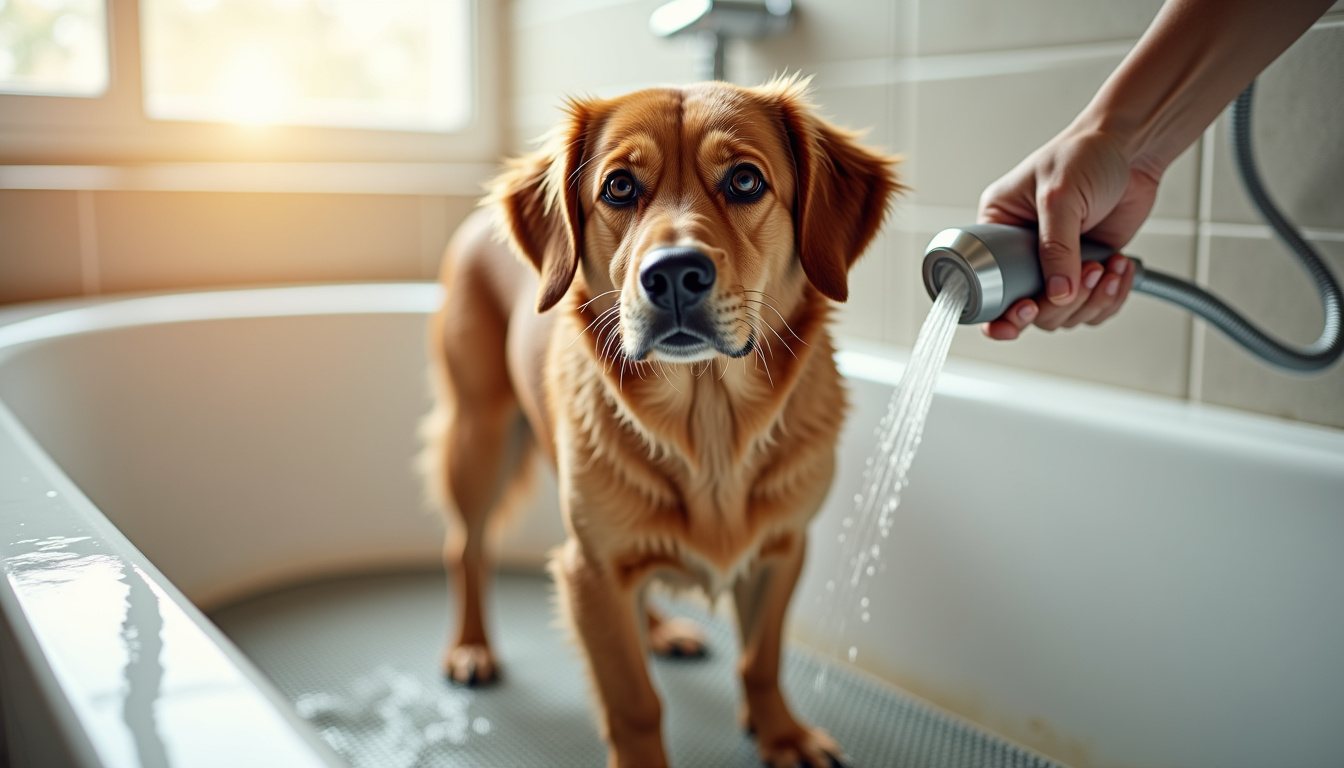
Most bath-time disasters happen before the dog is even wet. The shampoo is in the other room, the towels are in the dryer, the coat is full of tangles that tighten the moment they get wet, and the dog has already worked out what is going on. So this guide spends almost as long on preparation as on the bath itself.
Do you actually need to bathe right now?
Dogs don't need the frequent washing people do. A dog that rolled in something, came back from a muddy walk or simply smells doggy needs a bath. A dog that's a bit dusty may only need a good brush. Overbathing, especially with strong products, can leave skin dry and itchy.
If your dog has itchy, red, flaky, greasy or smelly skin, or a coat that is thinning in patches, a bath won't fix the cause and the wrong product can make it worse. That's a vet visit, and your vet may prescribe a medicated shampoo with its own instructions.
Get everything ready first
- Dog shampoo (and conditioner if you use one), opened and within reach.
- A non-slip mat for the tub or shower floor. Slipping is what frightens most dogs.
- A handheld shower head, a jug or a cup for rinsing.
- Two or three towels, plus an old one for the floor.
- A washcloth for the face.
- Treats, a lick mat smeared with something your dog likes, or both.
- A leash or a helper if your dog tends to bolt.
- A plan for drying: a warm room, a towel station, or a dryer set to cool or low.
For a small dog, a laundry sink or kitchen sink can be easier on your back than a bathtub. For large dogs, a walk-in shower or an outdoor rinse on a warm day can work, as long as the water is not cold.
Brush before you bathe
This is the step people skip. Water causes tangles and mats to shrink and tighten, so a small knot before the bath can become a solid mat after it. Brush and comb the whole coat first, all the way to the skin. Our brushing by coat type guide covers which tool suits your dog. Double-coated dogs also rinse and dry much faster with the loose undercoat removed first.
If you find mats that sit right against the skin, don't bathe over them and don't try to cut them out. Book a groomer to deal with the matting first, and see a vet if the skin underneath looks red, wet or sore.
Choosing a shampoo
For a healthy dog, a mild, unscented or lightly scented shampoo made for dogs is all you need. A few things are worth knowing:
- Use dog products. Human shampoo and dish soap are designed for different skin and for cutting grease. They tend to strip a dog's coat.
- Simple is fine. Heavy perfume isn't for the dog's benefit, and some dogs with sensitive skin react to fragrances.
- Read the label for flea or tick products. Shampoos that contain insecticides are regulated pesticides in the US, and the label instructions are part of using them safely. Never use a product labelled for dogs on a cat. The EPA has guidance on pet pesticide products worth reading before you buy one.
- Medicated shampoos are your vet's call. If you think your dog needs one, it's because something is wrong with the skin, and that needs diagnosing.
- Dilute if the label says so. Many dog shampoos are concentrated. Mixing shampoo with water in a jug or a squeeze bottle makes it spread more evenly and rinse out more easily.
Water temperature
Lukewarm. Test it on the inside of your wrist; it should feel comfortably warm, never hot. Dogs have no way of telling you the water is too hot, and they can't move away if you are holding them. Very small dogs, puppies, elderly dogs and short-coated breeds also chill quickly in cool water, so keep the water warm and the room draft-free.
The bath, step by step
- Wet the coat thoroughly, starting at the neck and working back and down. Double coats repel water surprisingly well, so use your hand to push water down to the skin.
- Keep water away from the face and ears. Don't pour water over the head. Many dogs panic when water goes up their nose or into their ears.
- Apply shampoo along the back and work it in with your fingertips, down the legs, under the belly, between the toes and around the tail. Massage, don't scrub.
- Clean the face separately with a damp washcloth, wiping away from the eyes. If you use shampoo on the head at all, keep it well away from the eyes and use very little.
- Rinse, then rinse again. Leftover shampoo is a common cause of itchy skin after a bath. Keep rinsing until the water runs completely clear and the coat squeaks slightly between your fingers, then do one more pass. Armpits, groin and under the collar line hide suds.
- Conditioner, if you use one, goes on after shampoo and gets rinsed just as thoroughly unless it's a leave-in product.
- Squeeze out excess water with your hands down the legs and tail, then let your dog shake before you lift the towel; it saves a lot of mopping.
Drying: the part that matters most for thick coats
Blot and squeeze with towels rather than rubbing hard, which tangles long and curly coats. A highly absorbent microfiber towel removes much more water than a cotton one.
Short, single coats will usually dry in a warm room within an hour or two. Thick double coats and curly coats are different: they can stay damp against the skin for a long time, and damp, compacted undercoat is a recipe for skin trouble and matting. For these dogs a dryer helps a lot.
- Human hair dryers can overheat skin quickly. If you use one, keep it on the coolest setting, keep it moving and keep your hand in the airflow so you feel what the dog feels.
- Dog dryers (often called high-velocity or force dryers) mainly use moving air rather than heat, and blow water out of the coat. They are loud. Introduce them gradually, start on the lowest speed, never point them at the face or ears, and stop if your dog is frightened.
- Never leave a dog unattended with a heated dryer, and never put a dog in a closed crate with a heater blowing into it. Overheating can happen fast, especially in flat-faced breeds.
Brush as the coat dries; for curly and long coats, brushing during drying gives a much smoother finish than brushing afterwards.
After the bath
Expect the zoomies. Keep your dog inside and warm until fully dry, partly for comfort and partly because a freshly washed dog's favorite activity is rolling in the garden. A bath is also a good time to check nails and ears while everything is soft and clean; see our guides to trimming dog nails safely and cleaning your dog's ears.
When a bath is a struggle
If your dog shakes, tries to climb out, or freezes completely, you are past the point where they can learn anything good from the session. Finish as quickly and gently as you can, and next time break bathing into smaller pieces: standing in the empty tub for treats, then wet feet, then a short rinse. Our guide to grooming an anxious dog covers this kind of step-by-step approach, and a professional groomer can take over while you build your dog's confidence.