Trimming dog nails safely, one small slice at a time
The quick is the reason people fear nail trims. Learn where it is, take off tiny amounts, and nail care becomes routine instead of a wrestling match.
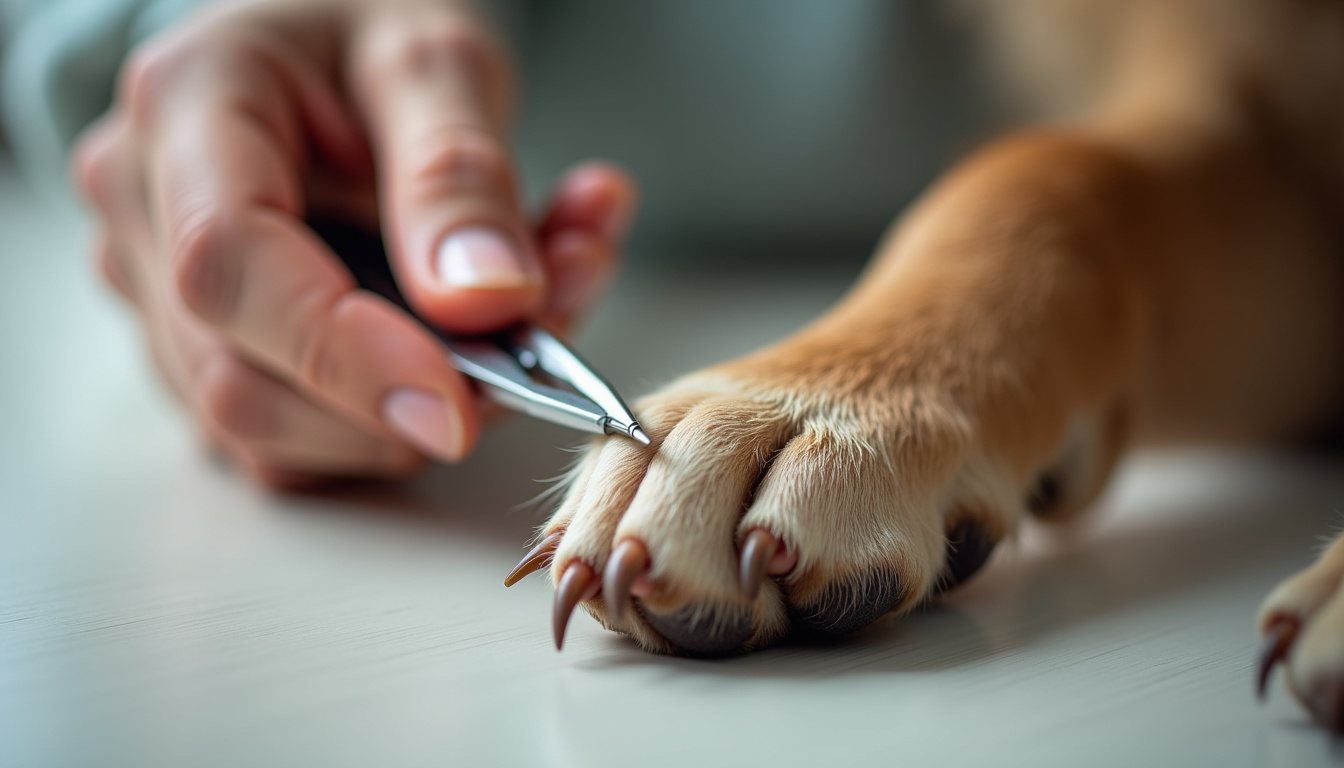
Nail trims frighten more owners than any other grooming job, and the fear is usually about one thing: the quick. It's the living core of the nail, with a blood vessel and nerve inside it. Cut into it and the nail bleeds and hurts, and your dog remembers. Avoid it, and a nail trim is no more uncomfortable for your dog than a haircut is for you.
The good news is that you rarely need to take much off. Small, frequent trims are safer and easier than occasional big ones.
How the quick works
Each nail is a hard outer shell with the quick running down the middle. On a clear or white nail you can usually see the quick as a pink area inside. On black nails you can't see it from the outside at all.
The quick grows with the nail. When nails are left long, the quick extends further toward the tip, which is why a dog with very long nails can't simply have them cut back to a normal length in one go. With regular trimming, the quick tends to recede gradually, letting you shorten the nail over several weeks. If your dog's nails are very overgrown, ask your vet or a groomer to help you plan that.
Tools
| Tool | Pros | Cons |
|---|---|---|
| Scissor-style clippers | Strong, good for medium and large dogs, easy to see what you are cutting | Need to be sharp; dull blades crush the nail |
| Guillotine clippers | Small and precise for small dogs | Can crush thick nails; less easy to see the cut |
| Rotary grinder | Takes off tiny amounts, smooth finish, good for dark nails | Noise and vibration; long hair can wrap round it |
| Styptic powder or pencil | Stops minor bleeding from the quick | Stings a little; keep it open before you start |
Whatever you use, keep it sharp and clean. A dull clipper squeezes the nail before it cuts, which is uncomfortable even when you are nowhere near the quick.
Before the first trim: get your dog comfortable with feet being handled
Many dogs dislike having their paws held. If yours pulls away as soon as you touch a foot, start there, not with the clippers.
- Touch a paw briefly, then give a treat. Repeat across several short sessions.
- Hold the paw for a second or two, then a little longer, rewarding each time.
- Gently press a toe to extend the nail. Reward.
- Show the clippers or grinder, let your dog sniff, reward. Run the grinder nearby without touching. Reward.
- Touch the tool to one nail without cutting. Reward.
- Trim one nail tip. Reward and stop for the day.
That can take days or weeks. It's still faster than years of struggling. Our guide to grooming an anxious dog goes deeper into this approach, and if you have a puppy, start paw handling now.
How to trim, step by step
- Good light, comfortable position. Small dogs often do best on your lap or a non-slip table; larger dogs lying on their side or sitting next to you. Have treats and styptic powder within reach.
- Hold the paw firmly but gently, with your thumb on the pad and a finger on top of the toe, pressing slightly to extend the nail.
- Trim the tip only, cutting at roughly the angle the nail would naturally wear, parallel to the floor when the dog stands. Take thin slices rather than one big cut.
- Look at the cut surface after each slice. On a white nail you'll see the pink of the quick approaching. On a dark nail, the cut surface first looks pale and dry and chalky; as you near the quick, a small dark or grey-pink circle appears in the center and the surface looks moist. That's your signal to stop.
- Don't forget dewclaws. These sit higher on the inside of the leg (usually front, sometimes back) and never touch the ground, so they don't wear down at all.
- Smooth sharp edges with a file or a quick pass of a grinder if you like.
There's no prize for finishing all four feet at once. If your dog is getting restless, stop after one paw, or even one nail, and do the next tomorrow.
Using a grinder
Grinders let you approach the quick gradually, which makes them popular for dark nails. Touch the grinder to the nail for a second or two at a time; continuous contact builds friction heat. Support the toe, keep long hair on the feet pulled back (a piece of old nylon stocking over the paw with the nail poked through is a common trick), and introduce the sound and vibration slowly before you ever touch a nail.
If you hit the quick
It happens to almost everyone eventually, including professionals. Stay calm, because your reaction will shape how your dog remembers it.
- Press styptic powder onto the end of the nail with a little steady pressure, or press the nail into the powder. Cornstarch is a common makeshift alternative.
- Keep your dog quiet for a few minutes so the clot can form.
- End the session on something pleasant, even if it's just a treat and a cuddle.
Call your vet if the bleeding doesn't stop after several minutes of steady pressure, if the nail is split or torn up into the quick, if the toe looks swollen afterwards, or if your dog keeps licking or limping.
How often to trim
It depends on your dog's activity and the surfaces they walk on. Dogs who walk a lot on pavement may need trims less often than dogs who mostly walk on grass or carpet. As a starting point, check nails every couple of weeks and trim whenever you hear them clicking on hard floors. Many dogs land somewhere around every three to six weeks.
When to hand the job over
There's no shame in letting someone else do nails. Groomers and many vet clinics offer nail trims, often as a quick walk-in service. Hand it over if your dog is so stressed that someone could get bitten, if the nails are very overgrown, or if you see anything abnormal: a nail growing into a pad, a cracked, discolored or swollen nail bed, or a dog who is suddenly sore about one foot. Those are problems for your vet.
Nail care sits alongside the rest of a home routine. A natural time to check is right after a bath, when nails are a little softer; see bathing a dog at home.