Cat grooming basics: helping a cat who mostly grooms herself
Most cats keep themselves clean. Where they need help is with loose hair, mats in long coats, nails and the changes that come with age or illness.
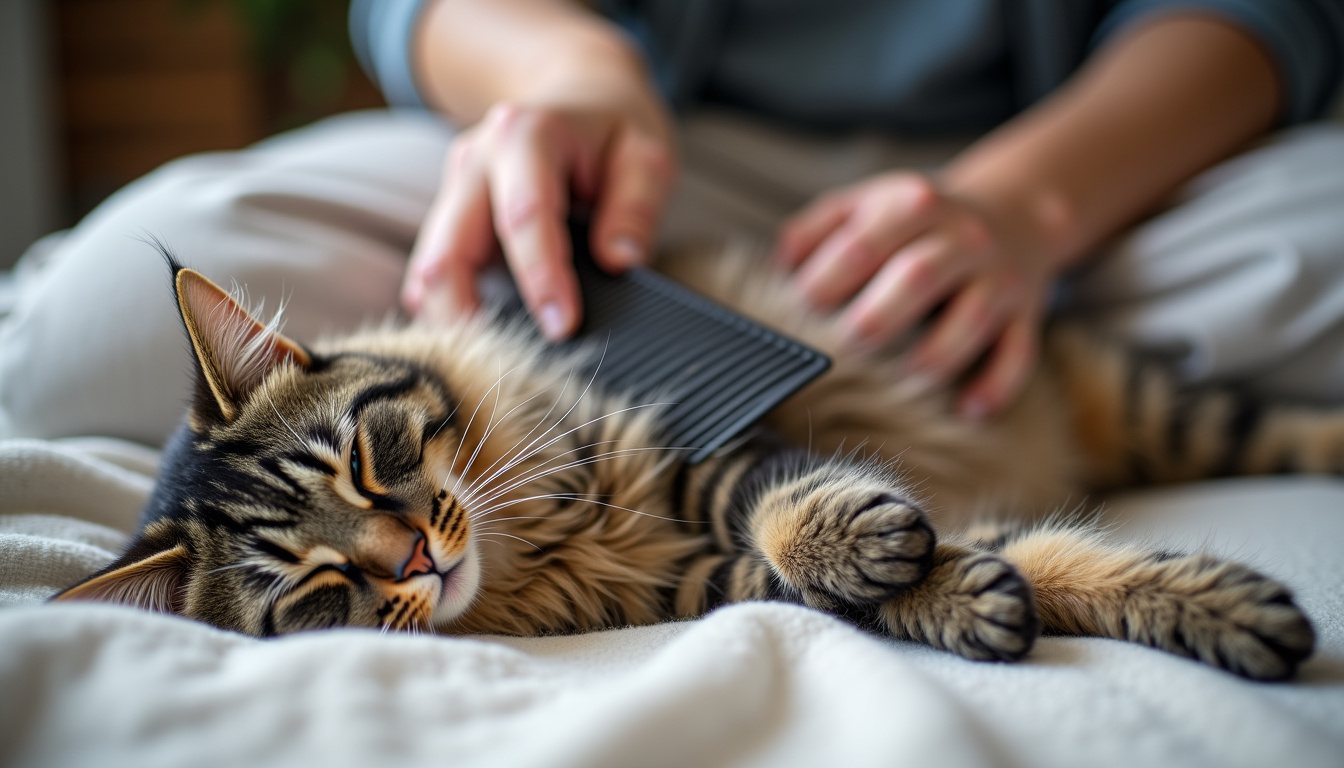
Cats spend a large part of their waking day grooming, and most do a very good job. So cat grooming at home isn't about replacing what a cat does for herself. It's about helping with the bits she can't manage well: loose hair that ends up swallowed, mats in long coats, nails that grow sharp or overgrown, and the areas an older or heavier cat can no longer reach.
Cats are also less forgiving than most dogs about being handled. Short, calm, cat-led sessions work best.
Why brushing helps
- Less swallowed hair. Cats swallow loose fur while grooming. Brushing removes some of it first, which may reduce hairballs.
- Mat prevention in long and semi-long coats.
- Health checks. Brushing is your chance to notice lumps, scabs, fleas, weight changes and sore spots.
- Bonding, for cats who enjoy it. Many do, once introduced gently.
Short-haired cats
A rubber grooming brush or mitt and a fine-toothed comb are usually all you need. Brush in the direction the hair lies, in short sessions. Once a week is often enough, more during shedding periods. Many short-haired cats particularly enjoy brushing around the cheeks and along the back.
Long-haired cats
Persians, Himalayans, Maine Coons, Ragdolls, Norwegian Forest Cats and long-haired mixed-breed cats need more help. Their undercoat tangles easily, and mats form in friction areas: behind the ears, under the chin, in the armpits, on the belly, in the "trousers" on the back legs and around the tail.
- Use a wide-toothed metal comb first, then a finer comb. A soft slicker brush can help, but with very light pressure; cat skin is delicate.
- Work in small sections, combing from the skin outward.
- Little and often: a few minutes daily is far easier for both of you than a long weekly session.
- Persians and other flat-faced breeds often need gentle cleaning around the eyes with a damp, soft cloth; ask your vet what's appropriate for your cat's eyes.
Mats: handle with great care
Please never cut a mat out of a cat's coat with scissors. Cat skin is thin and elastic and pulls up into the mat, so it is very easy to cut the skin without realizing. Scissor wounds from mat removal are a well-known and avoidable injury.
For a small, loose tangle, hold the hair at the base near the skin, so you're not pulling on it, and gently tease the tangle apart with your fingers, then the end teeth of a wide comb. A little cornstarch worked into the tangle can sometimes help it separate. Stop if your cat is uncomfortable.
Tight mats lying against the skin, mats over large areas, or a coat that has felted into a "pelt" need a vet or a groomer experienced with cats. They will usually clip them out with clippers, and some cats need sedation from a vet to have it done safely and without distress. Severe matting can hide sores and skin infections underneath, so a vet check is sensible.
Trimming cat nails
Indoor cats often need nail trims because they don't wear their claws down as much. Older cats' claws can also thicken and grow round into the paw pad, which needs prompt attention from your vet.
- Get your cat used to paw handling first: touch a paw, treat; gently press the pad to extend a claw, treat.
- Use small, sharp cat nail clippers or scissor-style clippers.
- With the claw extended, look for the pink quick inside. Cats' claws are usually clear, which makes it easier to see.
- Trim only the sharp, curved tip, well away from the quick.
- Do one or two claws per session if that's all your cat will tolerate.
Scratching posts and pads help keep claws in condition and give cats a healthy outlet for scratching. If you nick the quick, use styptic powder and gentle pressure, and call your vet if the bleeding doesn't stop. Much of our dog nail-trimming guide applies to cats too, though cat claws are smaller and retractable.
Ears, eyes and teeth
- Ears: look for dark debris, redness, odor or head shaking. Ear mites and infections need a vet; don't put anything into a cat's ear canal.
- Eyes: a little clear discharge can be normal in some breeds; thick, colored discharge, squinting or redness need a vet.
- Teeth: dental disease is common in cats. Brushing with a cat toothpaste is possible for many cats with patient training. Bad breath, drooling or dropping food are reasons to see the vet.
Bathing cats
Most cats rarely, if ever, need a bath. If your cat is contaminated with anything potentially toxic, call your vet first rather than bathing at home, because some substances need specific treatment. If you do bathe a cat for another reason, use a cat shampoo, lukewarm water, a shallow amount of water in a sink, a non-slip mat and a warm room, and keep water away from the head.
Never use dog flea or tick products on a cat. Some contain permethrin or similar ingredients that can be highly toxic to cats. Read labels carefully, and ask your vet which products are suitable. The EPA explains how pet pesticide products are regulated and labelled.
Grooming changes that need a vet
- A cat who has stopped grooming and has a greasy, scruffy or matted coat
- Overgrooming, bald patches or broken hairs
- Scabs, crusts, lumps, redness or flaky skin
- Frequent hairballs, retching or vomiting
- Pain when touched along the back or hips, which can be a sign of arthritis
Making grooming cat-friendly
Let your cat choose to approach. Start where she likes being stroked, keep sessions very short, offer treats, and stop at the first flick of the tail or flattening of the ears. Many of the ideas in grooming an anxious dog work just as well for cats. If you're looking for a groomer for your cat, ask specifically about their experience with cats; see how to choose a professional groomer.