Introducing a puppy to grooming, the easy way
Puppies who learn early that handling is safe and rewarding become adults who tolerate brushes, baths and nail trims. A few minutes a day now saves years of struggle.
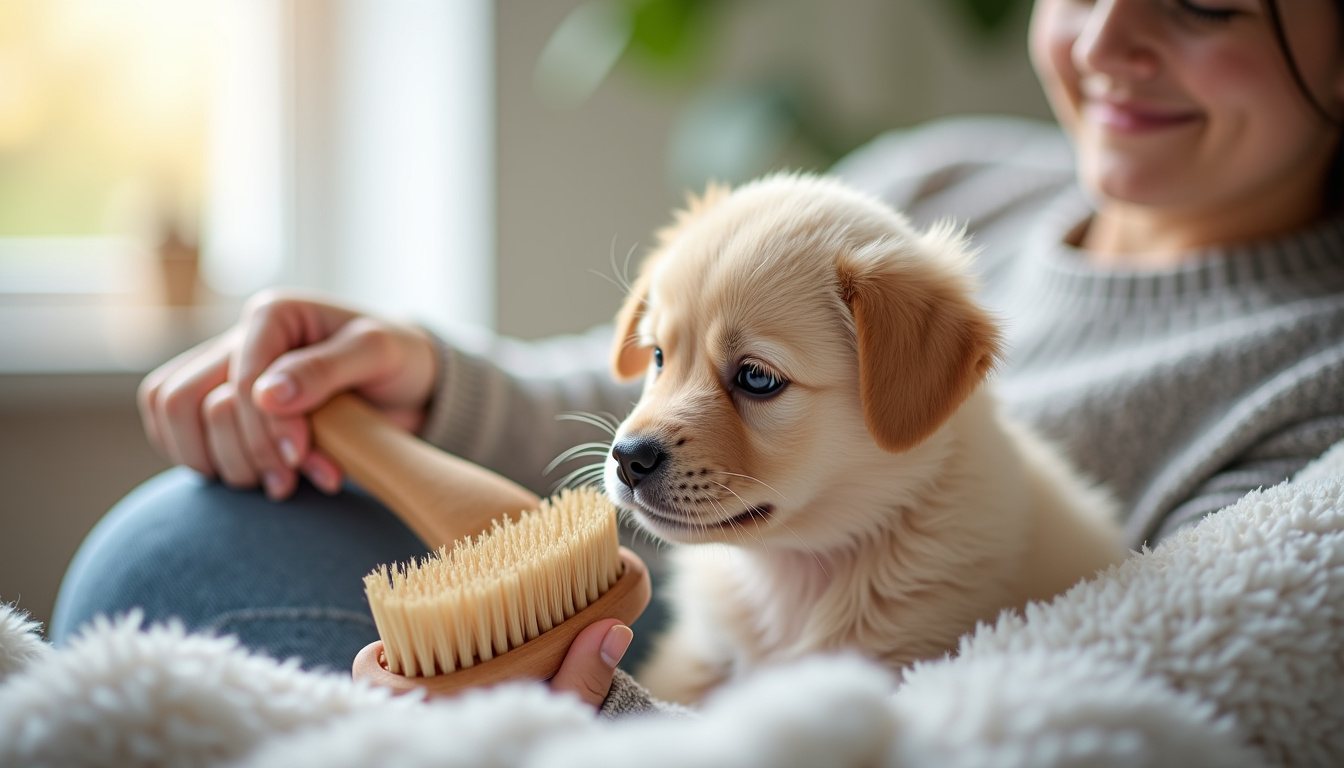
Puppies don't arrive knowing that a hand reaching for their paw is fine, or that the hair dryer isn't a monster. They learn it, and they learn fastest while they're young. Puppies go through an important socialization period in their first few months, when new experiences shape how they react to the world later. Grooming is part of that world.
The aim at this age isn't a perfect groom. It's a puppy who thinks being handled, brushed, bathed and dried is no big deal, or even fun.
Principles for every session
- Very short. A minute or two is plenty. Puppies have short attention spans and tire fast.
- Relaxed puppy. Choose a time after play and a nap, not when your puppy is wild or overtired.
- Tiny treats, generous praise. Pair every new touch with something good.
- Gentle, never forced. If your puppy wriggles, pause and wait for a calm moment rather than pinning them down.
- Finish while it's going well. Ending on a success is what builds confidence.
Stage 1: handling the whole body
Before you bring out any tools, teach your puppy that being touched everywhere is pleasant. While your puppy is relaxed on your lap or beside you:
- Paws: touch a paw, treat. Hold a paw briefly, treat. Gently spread the toes, treat. Press a nail out slightly, treat.
- Ears: stroke the ear, lift the flap and look inside, treat.
- Mouth: lift the lip for a second to look at the teeth, treat. Touch a tooth with a finger, treat.
- Tail and back end: gentle touches under the tail and around the hind legs, treat.
- Collar grab: hold the collar gently for a second, treat. Handy for vet visits too.
Spread this across a few short sessions a day. Within a week or two most puppies start offering paws happily.
Stage 2: tools
Brush and comb
Start with a soft brush, even if your puppy will need a slicker later. Let your puppy sniff it, then a few gentle strokes along the back while you feed treats or let them lick a lick mat. Gradually add other areas and introduce a comb. If your puppy will grow a long, curly or double coat, daily brushing habits now are the best investment you'll make. See dog brushing by coat type for what your puppy's adult coat will need.
Nail clippers and grinder
Puppy nails are sharp and grow quickly, which makes them perfect practice. Show the clipper, touch it to a nail, treat. Trim the very tip of one nail, treat, and stop. If you plan to use a grinder, introduce the sound from a distance first. Our guide to trimming dog nails safely explains the quick and how to avoid it.
Toothbrush
Let your puppy lick dog toothpaste from your finger, then from a finger brush, then brush a few front teeth. Never use human toothpaste. Puppies lose their baby teeth as adult teeth come through, often around three to six months, and gums can be sore; keep it gentle. The full routine is in dog dental care at home.
Stage 3: bathing and drying
Make the bath familiar before it's wet. Lift your puppy into the empty tub or sink on a non-slip mat, feed treats, lift out. Next time, add a little lukewarm water around the feet. Then a short rinse of the body with warm water. Then a real bath.
Puppies, especially small ones, chill easily. Keep the room warm, use lukewarm water, keep water off the face (wipe it with a damp cloth instead) and dry thoroughly with towels. Introduce a dryer gradually, starting on the lowest, coolest setting at a distance. Our home bathing guide has the full process.
Stage 4: standing on a table
Professional groomers and vets work with dogs on tables. Teaching your puppy to stand calmly on a stable, non-slip raised surface, with you holding them and treats coming, helps later. Never leave a puppy alone on a raised surface, even for a second.
A simple first-month routine
You don't need a rigid timetable, but a loose plan helps you remember every area. One approach is to pick one handling target per day and repeat it across two or three very short sessions:
- Monday: paws and a nail tip
- Tuesday: ears and a look inside
- Wednesday: mouth, lip lifts and a taste of dog toothpaste
- Thursday: brush and comb all over
- Friday: standing on a raised, non-slip surface
- Weekend: empty-bath visits, dryer sounds at a distance, or simply a rest
By the end of the month, most puppies treat these touches as ordinary, which is exactly the goal.
Preparing for the first groomer visit
- Ask your vet when your puppy is protected enough by vaccinations to visit a salon.
- Book an introductory visit if your groomer offers one: a short session with a little brushing, a nail tip trim and lots of treats, rather than a full groom.
- Visit just to say hello, if the salon allows, so the sights, sounds and smells become familiar.
- Tell the groomer what you've practiced and anything your puppy finds tricky.
For what to look for in a salon, see how to choose a professional groomer.
Signs your puppy needs a slower pace
Struggling, mouthing hard, yelping, freezing, or trying to hide are signs to make sessions shorter and steps smaller. Puppies mouth a lot as part of normal behavior; redirect onto a chew rather than reacting sharply. If your puppy seems genuinely frightened by grooming, follow the approach in grooming an anxious dog and mention it to your vet at the next check-up.
Use your puppy's first grooming sessions to get to know what normal looks like: skin, coat, ears, eyes, teeth and paws. Mention anything unusual, such as redness, discharge, scratching, sores or a persistent smell, to your vet.