Deshedding season: a plan for the weeks when the fur flies
Twice a year many double-coated dogs drop their undercoat in clumps. A bath, a dryer and steady brushing turn weeks of tumbleweeds into a few focused sessions.
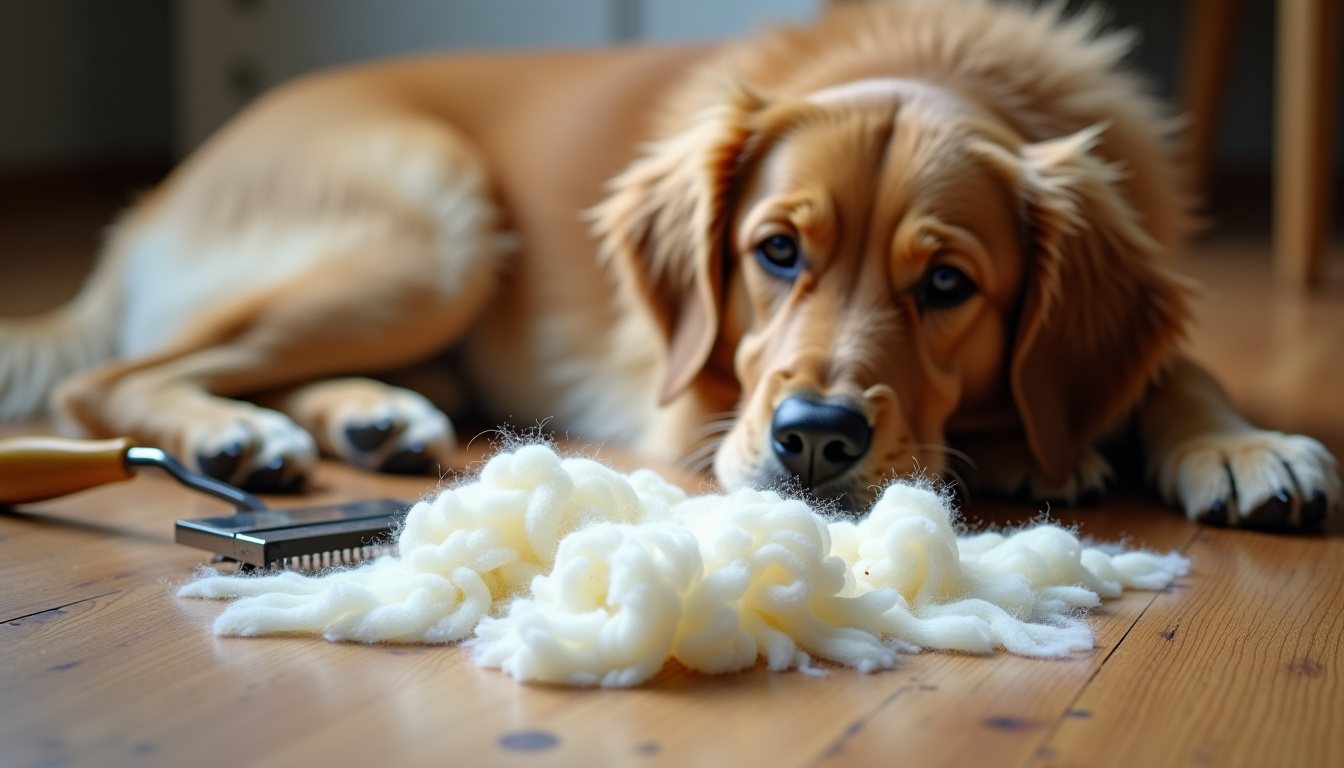
If you've lived with a Husky, a German Shepherd or a Golden through spring, you know the moment: you brush a section of coat and a cloud of undercoat comes out, then another, then another. Fur drifts across the floor and clings to every dark item of clothing you own. That's a coat blow, and it's normal.
Why dogs blow their coats
Double-coated dogs grow a dense, insulating undercoat for colder months and drop much of it as days lengthen and temperatures rise, then grow it back for winter. The timing is influenced by daylight and temperature, so dogs who live mostly in climate-controlled homes often have less defined seasons and shed in smaller amounts year-round.
Dogs with single coats shed too, just usually less dramatically. Curly and many long silky coats shed very little onto the floor, but that doesn't mean they don't lose hair; it gets trapped in the coat, which is why those coats mat.
Intact females may also shed noticeably after a heat cycle or after having puppies. That's normal too.
Tools that make the job faster
- Undercoat rake: long teeth that pass through the guard hair and pull out loose undercoat. The workhorse of deshedding season.
- Slicker brush: for line brushing and finishing. Light pressure only.
- Bladed deshedding tool: very effective at grabbing loose undercoat. Use gently, in short sessions, and don't use it on curly or long silky coats or on any irritated skin.
- Wide and fine-toothed metal comb: checks that you've reached the skin.
- Rubber curry or grooming glove: good for short-coated shedders and for dogs who are wary of brushes.
- A dryer with a cool setting or a dog high-velocity dryer, if you have one and your dog is comfortable with it.
Our guide to brushing by coat type explains how each tool fits each coat.
A deshedding plan that works
1. Brush first
Start with a thorough dry brush to remove as much loose coat as you can and to find any tangles before they get wet. Work the trouble spots carefully: behind the ears, the neck ruff, the "pants" on the back legs and the tail.
2. Bathe
A bath with warm water and a good rinse helps loosen undercoat that's ready to come out. Work shampoo down to the skin, which takes patience with a thick coat, and rinse until the water runs clear. Follow our bathing a dog at home guide for the details.
3. Dry thoroughly
This is where most of the coat comes out. Drying with a high-velocity dryer blows out large amounts of loose undercoat; drying with towels and a cool hair dryer setting is slower but still helps. Make sure the coat is dry right down to the skin; damp undercoat left packed against the skin can irritate it.
4. Brush again once dry
Go over the whole dog with the rake and slicker, then the comb. You'll be amazed how much more comes out.
5. Short daily sessions until the blow ends
Ten or fifteen minutes a day of raking and brushing keeps up with the shed. Outdoors or on an easy-to-sweep floor is best.
Gentleness matters
It's tempting to keep going while big tufts are coming out. Resist. Overdoing it, particularly with bladed tools or a slicker on one spot, can cause brush burn: red, sore, sometimes raw skin. Signs your dog has had enough include moving away, turning to look at the brush, licking lips or yawning. Stop and pick it up tomorrow.
Never shave a double-coated dog to "get it over with." Shaving removes guard hair along with undercoat, exposes skin to the sun, and can lead to patchy regrowth. Our guide to why we don't shave double coats explains more.
A sample week during a heavy shed
Here is how the work might be spread out for a medium-sized double-coated dog. Adjust to your dog's coat and tolerance.
| Day | Task | Time |
|---|---|---|
| Day 1 | Thorough dry brush, then bath, dry and brush again | About an hour, with breaks |
| Days 2 to 4 | Undercoat rake over the body, slicker on trouble spots, quick comb check | 10 to 15 minutes |
| Day 5 | Full line brush and comb, check ears, feet and nails | 20 to 30 minutes |
| Days 6 and 7 | Light rake and comb, or rest if your dog's skin looks pink | 5 to 10 minutes |
Most dogs need a second bath only if they get dirty; extra bathing isn't required to finish the shed.
Living with shedding in the house
- Brush outdoors when possible.
- Washable throws on furniture and the dog's bed make laundry easier than vacuuming upholstery.
- A damp rubber glove or squeegee lifts hair off fabric surprisingly well.
- Vacuum more often during the blow; a little and often is easier than a big job.
When shedding isn't normal
Normal seasonal shedding comes out evenly across the coat, the skin underneath looks healthy, and your dog is otherwise well. Talk to your vet if you see:
- Bald patches, thinning areas, or hair loss in a symmetrical pattern
- Red, scaly, greasy, smelly or scabby skin
- Constant scratching, licking or chewing
- Fleas or flea dirt (tiny dark specks that turn reddish on damp paper)
- Shedding together with weight changes, increased thirst, lethargy or other changes in behavior
Excessive or unusual hair loss can be linked to parasites, allergies, skin infections, hormonal conditions and other issues that need a proper diagnosis. Diet can play a role in coat condition too, but please don't change diets or add supplements to fix shedding without asking your vet.
Getting help
A professional deshedding groom at the start of the blow can take a lot of work off your hands, and you can then keep up at home. If your dog finds grooming stressful, splitting the work into very short, positive sessions helps; see grooming an anxious dog. For tips on finding a good salon, read how to choose a professional groomer.